The venue is packed, the music sounds great and suddenly the logging noise limiter kicks in. The volume drops, the dance floor loses energy and everyone starts asking questions. Is it configured incorrectly? Are the speakers to blame? Can things improve without changing the legal limits?
In many installations there is considerable room for improvement. Not necessarily by increasing sound pressure levels, but by making better use of the acoustic energy available.
Incorrect speaker placement, bass buildup, phase problems or poorly chosen EQ can cause a system to hit its operating limits before delivering a satisfactory listening experience.
This article examines common problems and the technical solutions that improve sound in music bars, nightclubs, restaurants and concert venues.
CONTROL AND MEASUREMENT
What is a logging noise limiter and what does it do?
A logging noise limiter is a device designed to control the sound level of an installation and record operating information.
Depending on its model and configuration, it can monitor sound pressure levels, intervene in the audio signal and store operating logs, incidents and threshold exceedances.
Installation may be mandatory for certain entertainment and hospitality activities under licence conditions, regional regulations and applicable municipal bylaws.
A limiter sets operating conditions. Sound quality within those conditions depends on the design and tuning of the entire installation.
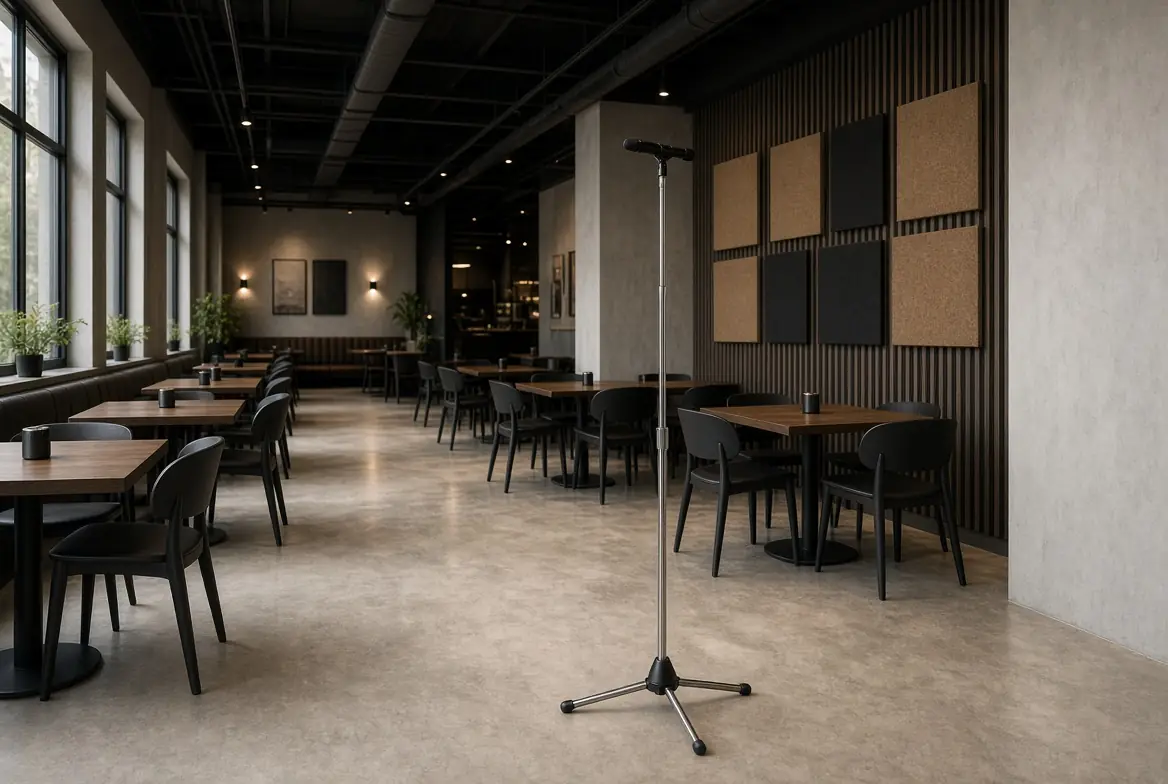
Acoustic measurement reveals the actual behaviour of the sound system and venue.
One important idea
Better sound does not necessarily mean more decibels. A system with a balanced frequency response, good coverage and low distortion can sound clearer and more powerful without increasing its overall sound level.
What exactly does a limiter record?
Features depend on the manufacturer and model. Parameters may include equivalent sound levels, threshold exceedances, system interventions and operating incidents.
According to the configured weighting and parameters
Time-stamped measurement records
Threshold exceedances and system interventions
Data storage depending on the model
ACOUSTIC DIAGNOSIS
The most common problem: the limiter intervenes and nobody knows why
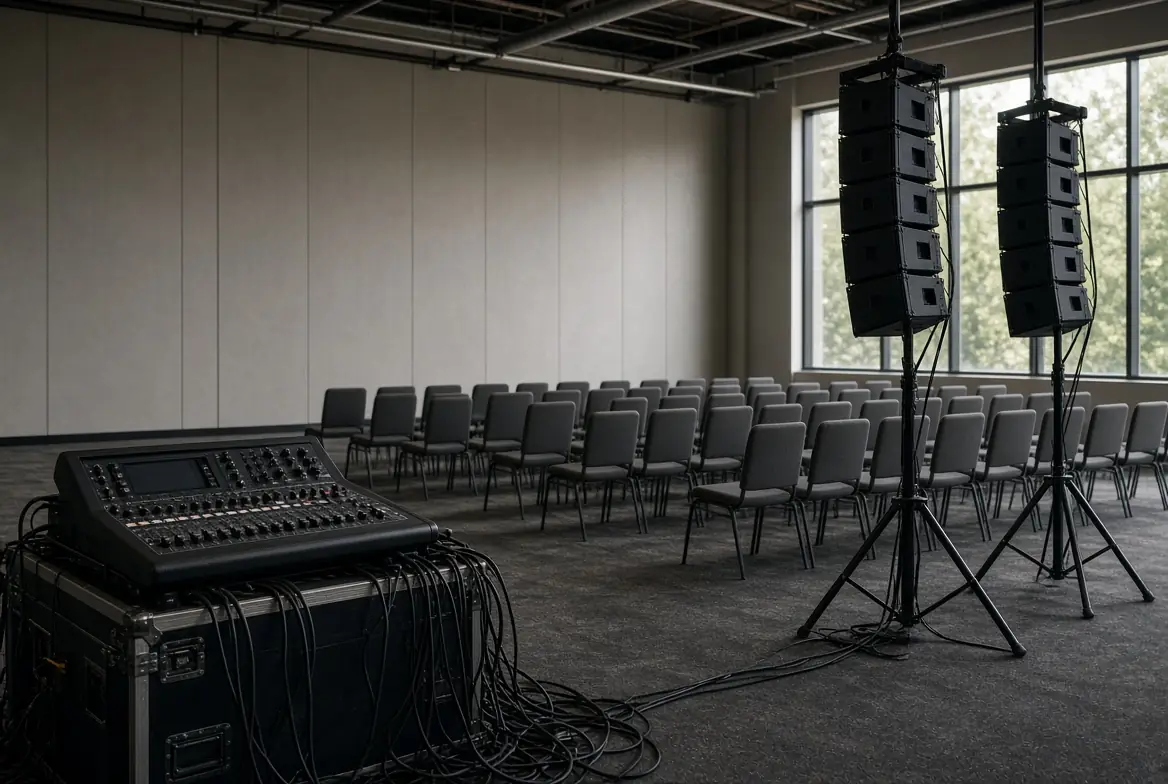
Imagine a music bar with a correctly configured limiter, two main loudspeakers and a subwoofer installed in a corner.
The venue manager notices the limiter frequently intervening, particularly during certain tracks.
A technical assessment identifies three problems:
- Bass buildup in particular parts of the room.
- Significant reflections caused by the direction of the speakers.
- Unsuitable equalisation, with excessive energy in certain frequency bands.
Illustrative technical example of a typical installation.
Problems identified
- Uneven bass distribution around the venue.
- Loudspeakers aimed poorly in relation to the audience area.
- Excessive energy at certain frequencies.
- Poor integration between subwoofer and main speakers.
Technical solutions
- Review subwoofer location and tuning.
- Correct the direction of the main speakers.
- Equalise the system using measurements.
- Adjust crossover, levels, polarity and delays.
What can system optimisation achieve?
A more balanced response, better intelligibility, more consistent sound distribution and higher perceived quality, without raising the limiter's authorised threshold.
COMMON PROBLEMS
Seven issues that stop your sound system performing at its best
When a limiter frequently intervenes, evaluate the entire installation before blaming the device itself.
01
Bass buildup
Low-frequency interaction with the room's dimensions and boundaries creates resonant modes. These produce areas where certain frequencies are amplified and others are cancelled.
02
Uncontrolled reflections
Walls, ceilings and reflective surfaces can create an uneven response, reduce intelligibility and produce major differences between listening areas.
03
Poor equalisation
A system tuned without measuring its actual behaviour may have excessive energy, masking and reduced clarity. Proper EQ avoids wasting the available acoustic headroom.
04
Poor speaker positioning
Orientation and coverage determine how sound reaches the audience. Poor distribution creates overly loud zones and others with insufficient coverage.
05
Poor subwoofer integration
Incorrect crossover settings, phase differences or unsuitable delays between subwoofers and main speakers can cause reinforcement and cancellation around the crossover region.
06
Incorrect calibration
Settings that do not match required parameters, calibration errors or measurement-system faults can affect limiter behaviour and the reliability of its logs.
07
Insufficient sound insulation
When the problem is sound transmission to homes or other premises, adjusting an equaliser is not enough. An insulation assessment, identification of transmission paths and appropriate building work may be required.
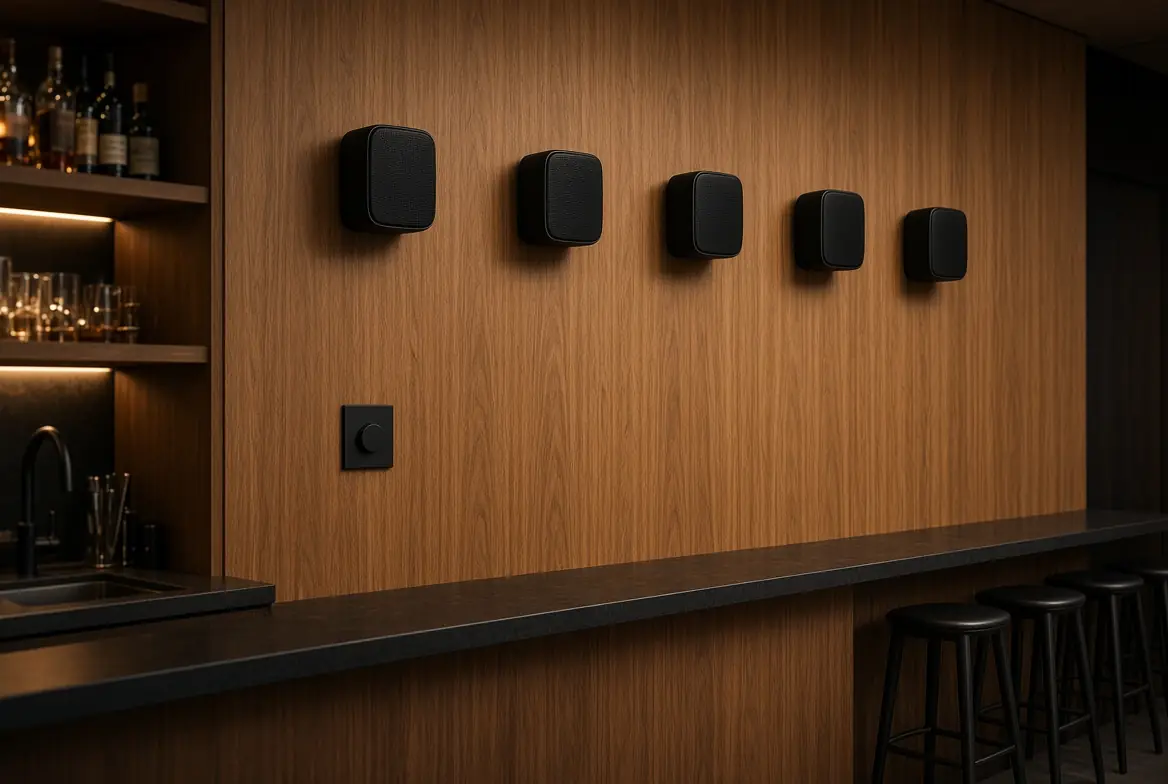
Coverage design and room acoustics are essential to achieving even sound distribution.
ADVANCED SOLUTIONS
When neighbours are affected by bass
Imagine a nightclub with a powerful sound system and a correctly configured limiter. Nearby homes still receive disturbing low-frequency noise.
An acoustic assessment identifies particularly problematic transmission in certain bass frequency bands. The source may involve both radiation from the system and shortcomings in building insulation or structure-borne transmission paths.
Stage one: assess subwoofer distribution
For some projects, it may be worth investigating a cardioid subwoofer configuration. By arranging sources physically and adjusting delays and polarity, the radiation pattern can be altered and energy reduced in certain directions.
Effectiveness depends on geometry, operating frequencies and system characteristics. It does not replace acoustic insulation or eliminate structural transmission on its own.
Stage two: room-specific equalisation
Once problematic frequencies are identified, targeted reduction through signal processing and system setup can be considered. The goal is better tonal balance and acoustic energy control where necessary, without introducing new deficiencies.
Stage three: insulation and complementary treatment
Where building partitions are deficient, solutions should be designed around the identified transmission paths. They may include decoupled assemblies, additional mass, sealed junctions and other construction measures.
Noise pollution issues require identifying the source. Limiting sound levels, improving system directivity and increasing insulation are different measures that may complement each other.
What you can check yourself and what needs a technician
Basic checks
- Check whether the system distorts before reaching its usual operating level.
- Avoid extreme EQ settings on the mixer or DJ equipment.
- Check that loudspeakers are not obstructed or aimed incorrectly.
- Inspect connections, cables and signal levels between equipment.
- Record when limiter interventions occur and which music is playing.
Specialist technical work
- Acoustic measurements using appropriate instruments.
- Spectral and frequency-response analysis.
- Adjustment of filters, crossovers, levels, polarity and delays.
- Verification of the limiter's calibration and authorised configuration.
- Insulation studies and proposed acoustic solutions where necessary.
REGULATIONS AND DOCUMENTATION
When the problem is documentation, not sound quality
Sometimes an installation may appear to work correctly while having documentation or configuration shortcomings.
Some points worth checking include:
- Whether the installed limiter meets the activity's required specifications.
- Whether the device records and retains required data correctly.
- Whether its configuration matches licence conditions.
- Whether required reports, checks and certificates are available.
- Whether any work on the device meets applicable sealing, traceability and documentation requirements.
Specific requirements depend on applicable regulations, the type of activity, the licence and municipal bylaws. Before modifying an installation, check the approved operating conditions for that establishment.
How should a professional logging noise limiter be installed?
Installing a limiter should involve more than connecting a device between the mixing desk and amplifiers.
For reliable operation, the system should be considered as a whole.
A noise limiter does not have to ruin your venue's sound
A logging limiter is one component in an audio installation. Its job is to monitor and record certain operating parameters.
When the loudspeaker system is properly designed, the room has been assessed and processing is tuned through measurement, perceived sound quality can improve substantially.
The key is not trying to exceed the established limit, but using every available decibel more effectively.
RinconRock Rental AV works with professional sound systems, audiovisual installations, measurements and acoustic solutions for venues in Málaga and along the Costa del Sol.
RINCONROCK RENTAL AV
Does your venue have problems with its noise limiter?
We can assess the installation, identify acoustic problems and recommend solutions to improve your system's performance.
Málaga · Rincón de la Victoria · Axarquía · Marbella · Costa del Sol
Other services you might find useful
Sound installations
Design, installation and tuning of professional audiovisual systems.
Learn more →The venue is packed, the music sounds great and suddenly the logging noise limiter kicks in. The volume drops, the dance floor loses energy and everyone starts asking questions. Is it configured incorrectly? Are the speakers to blame? Can things improve without changing the legal limits?
In many installations there is considerable room for improvement. Not necessarily by increasing sound pressure levels, but by making better use of the acoustic energy available.
Incorrect speaker placement, bass buildup, phase problems or poorly chosen EQ can cause a system to hit its operating limits before delivering a satisfactory listening experience.
This article examines common problems and the technical solutions that improve sound in music bars, nightclubs, restaurants and concert venues.
CONTROL AND MEASUREMENT
What is a logging noise limiter and what does it do?
A logging noise limiter is a device designed to control the sound level of an installation and record operating information.
Depending on its model and configuration, it can monitor sound pressure levels, intervene in the audio signal and store operating logs, incidents and threshold exceedances.
Installation may be mandatory for certain entertainment and hospitality activities under licence conditions, regional regulations and applicable municipal bylaws.
A limiter sets operating conditions. Sound quality within those conditions depends on the design and tuning of the entire installation.
Acoustic measurement reveals the actual behaviour of the sound system and venue.
One important idea
Better sound does not necessarily mean more decibels. A system with a balanced frequency response, good coverage and low distortion can sound clearer and more powerful without increasing its overall sound level.
What exactly does a limiter record?
Features depend on the manufacturer and model. Parameters may include equivalent sound levels, threshold exceedances, system interventions and operating incidents.
According to the configured weighting and parameters
Time-stamped measurement records
Threshold exceedances and system interventions
Data storage depending on the model
ACOUSTIC DIAGNOSIS
The most common problem: the limiter intervenes and nobody knows why
Imagine a music bar with a correctly configured limiter, two main loudspeakers and a subwoofer installed in a corner.
The venue manager notices the limiter frequently intervening, particularly during certain tracks.
A technical assessment identifies three problems:
- Bass buildup in particular parts of the room.
- Significant reflections caused by the direction of the speakers.
- Unsuitable equalisation, with excessive energy in certain frequency bands.
Illustrative technical example of a typical installation.
Problems identified
- Uneven bass distribution around the venue.
- Loudspeakers aimed poorly in relation to the audience area.
- Excessive energy at certain frequencies.
- Poor integration between subwoofer and main speakers.
Technical solutions
- Review subwoofer location and tuning.
- Correct the direction of the main speakers.
- Equalise the system using measurements.
- Adjust crossover, levels, polarity and delays.
What can system optimisation achieve?
A more balanced response, better intelligibility, more consistent sound distribution and higher perceived quality, without raising the limiter's authorised threshold.
COMMON PROBLEMS
Seven issues that stop your sound system performing at its best
When a limiter frequently intervenes, evaluate the entire installation before blaming the device itself.
01
Bass buildup
Low-frequency interaction with the room's dimensions and boundaries creates resonant modes. These produce areas where certain frequencies are amplified and others are cancelled.
02
Uncontrolled reflections
Walls, ceilings and reflective surfaces can create an uneven response, reduce intelligibility and produce major differences between listening areas.
03
Poor equalisation
A system tuned without measuring its actual behaviour may have excessive energy, masking and reduced clarity. Proper EQ avoids wasting the available acoustic headroom.
04
Poor speaker positioning
Orientation and coverage determine how sound reaches the audience. Poor distribution creates overly loud zones and others with insufficient coverage.
05
Poor subwoofer integration
Incorrect crossover settings, phase differences or unsuitable delays between subwoofers and main speakers can cause reinforcement and cancellation around the crossover region.
06
Incorrect calibration
Settings that do not match required parameters, calibration errors or measurement-system faults can affect limiter behaviour and the reliability of its logs.
07
Insufficient sound insulation
When the problem is sound transmission to homes or other premises, adjusting an equaliser is not enough. An insulation assessment, identification of transmission paths and appropriate building work may be required.
Coverage design and room acoustics are essential to achieving even sound distribution.
ADVANCED SOLUTIONS
When neighbours are affected by bass
Imagine a nightclub with a powerful sound system and a correctly configured limiter. Nearby homes still receive disturbing low-frequency noise.
An acoustic assessment identifies particularly problematic transmission in certain bass frequency bands. The source may involve both radiation from the system and shortcomings in building insulation or structure-borne transmission paths.
Stage one: assess subwoofer distribution
For some projects, it may be worth investigating a cardioid subwoofer configuration. By arranging sources physically and adjusting delays and polarity, the radiation pattern can be altered and energy reduced in certain directions.
Effectiveness depends on geometry, operating frequencies and system characteristics. It does not replace acoustic insulation or eliminate structural transmission on its own.
Stage two: room-specific equalisation
Once problematic frequencies are identified, targeted reduction through signal processing and system setup can be considered. The goal is better tonal balance and acoustic energy control where necessary, without introducing new deficiencies.
Stage three: insulation and complementary treatment
Where building partitions are deficient, solutions should be designed around the identified transmission paths. They may include decoupled assemblies, additional mass, sealed junctions and other construction measures.
Noise pollution issues require identifying the source. Limiting sound levels, improving system directivity and increasing insulation are different measures that may complement each other.
What you can check yourself and what needs a technician
Basic checks
- Check whether the system distorts before reaching its usual operating level.
- Avoid extreme EQ settings on the mixer or DJ equipment.
- Check that loudspeakers are not obstructed or aimed incorrectly.
- Inspect connections, cables and signal levels between equipment.
- Record when limiter interventions occur and which music is playing.
Specialist technical work
- Acoustic measurements using appropriate instruments.
- Spectral and frequency-response analysis.
- Adjustment of filters, crossovers, levels, polarity and delays.
- Verification of the limiter's calibration and authorised configuration.
- Insulation studies and proposed acoustic solutions where necessary.
REGULATIONS AND DOCUMENTATION
When the problem is documentation, not sound quality
Sometimes an installation may appear to work correctly while having documentation or configuration shortcomings.
Some points worth checking include:
- Whether the installed limiter meets the activity's required specifications.
- Whether the device records and retains required data correctly.
- Whether its configuration matches licence conditions.
- Whether required reports, checks and certificates are available.
- Whether any work on the device meets applicable sealing, traceability and documentation requirements.
Specific requirements depend on applicable regulations, the type of activity, the licence and municipal bylaws. Before modifying an installation, check the approved operating conditions for that establishment.
How should a professional logging noise limiter be installed?
Installing a limiter should involve more than connecting a device between the mixing desk and amplifiers.
For reliable operation, the system should be considered as a whole.
A noise limiter does not have to ruin your venue's sound
A logging limiter is one component in an audio installation. Its job is to monitor and record certain operating parameters.
When the loudspeaker system is properly designed, the room has been assessed and processing is tuned through measurement, perceived sound quality can improve substantially.
The key is not trying to exceed the established limit, but using every available decibel more effectively.
RinconRock Rental AV works with professional sound systems, audiovisual installations, measurements and acoustic solutions for venues in Málaga and along the Costa del Sol.
RINCONROCK RENTAL AV
Does your venue have problems with its noise limiter?
We can assess the installation, identify acoustic problems and recommend solutions to improve your system's performance.
Málaga · Rincón de la Victoria · Axarquía · Marbella · Costa del Sol
Other services you might find useful
Sound installations
Design, installation and tuning of professional audiovisual systems.
Learn more →
Logging Noise Limiters: Real Solutions for Your Venue